
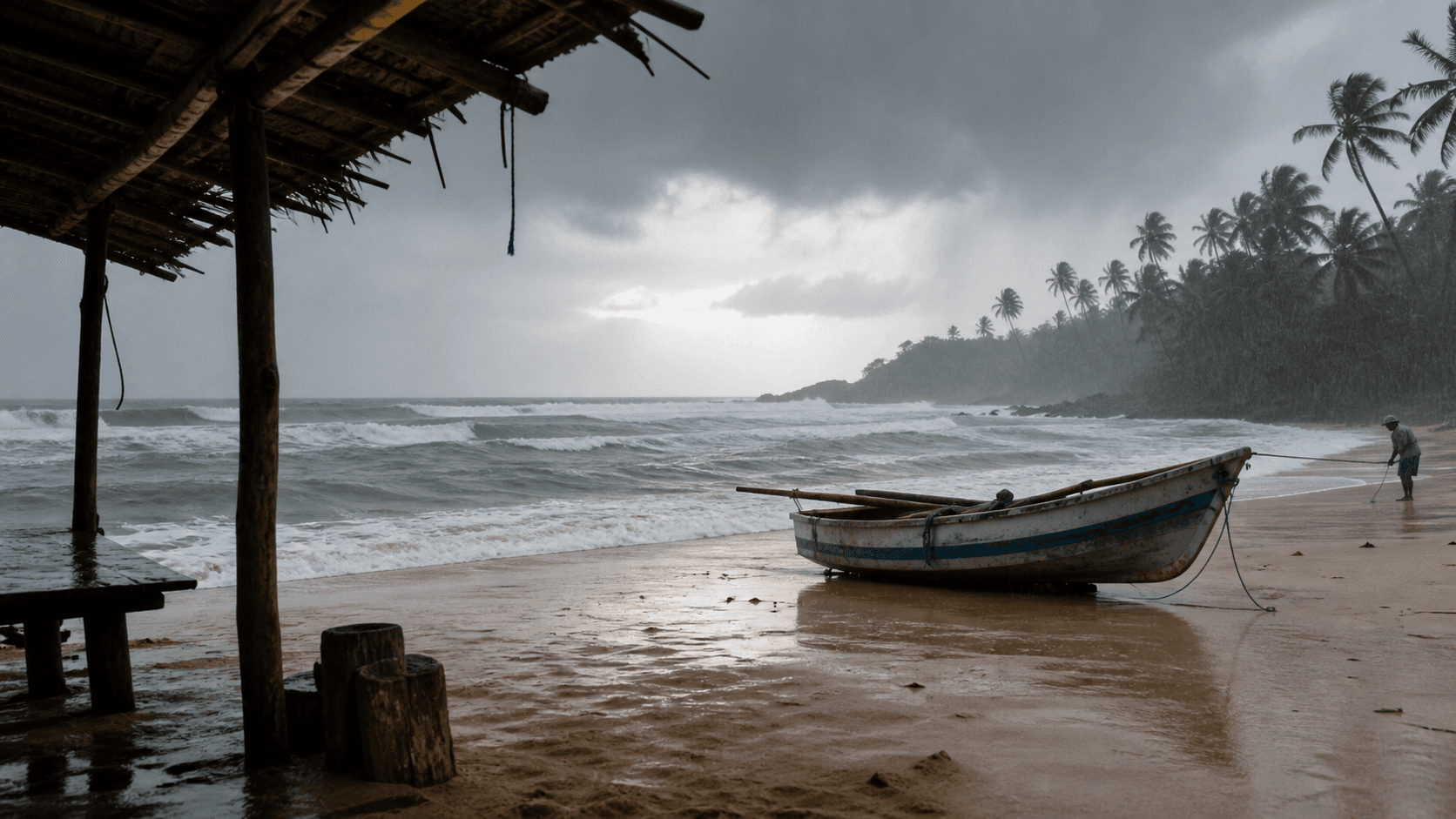
Almost every guide to Sri Lanka opens by telling you the best time to visit is December to April. That is true of about a third of the island. Two monsoons run here on opposite schedules, which means that in any given month some part of the country is having its best weather of the year and some other part is unswimmable.
The southwest monsoon brings rain to the south and west from roughly May to September. The northeast monsoon closes the north and east from roughly October to January. Between them sit two inter-monsoon periods that are unreliable nearly everywhere. There is no month in which the whole island is at its best, and no month in which none of it is.
Where to be, month by month
| Region | Jan | Feb | Mar | Apr | May | Jun | Jul | Aug | Sep | Oct | Nov | Dec |
|---|---|---|---|---|---|---|---|---|---|---|---|---|
| West and south coast | ||||||||||||
| The southeastern parks | ||||||||||||
| East coast | ||||||||||||
| Hill country | ||||||||||||
| Cultural Triangle | ||||||||||||
| The north | ||||||||||||
| Colombo and the west | ||||||||||||
- Prime
- Good
- Mixed
- Out of season
The windows that actually decide an itinerary
Weather is only half of it. The things people come here for (whales, leopards, a surfable wave) run on their own calendars, and those matter more than whether it rains for an hour in the afternoon.
When each experience is in season, and where
Whale watching
- Where
- Mirissa
- When
- Nov to Aprpeak Dec to Jan
- Note
- Blue whales pass close to the shelf edge off the south coast. December, January and April are the strongest months. Pairs naturally with the south-coast dry season.
Whale watching
- Where
- Trincomalee
- When
- May to Sep
- Note
- The east-coast mirror of Mirissa. Having both means we can put a traveller in front of whales in any month of the year, as long as they are willing to move.
Leopard safari
- Where
- Yala National Park
- When
- Feb to Julpeak Mar to May
- Note
- The dry season concentrates animals around shrinking waterholes, which is what makes leopard sightings realistic rather than lucky. Yala is also the busiest park on the island, so for anyone who would be put off by jeep density, Wilpattu is the better recommendation.Dates move year to year, so confirm before planning around it.
Safari
- Where
- Wilpattu National Park
- When
- Feb to Jun
- Note
- Larger and far quieter than Yala, built around natural lakes rather than a single circuit. Sightings take more patience and feel more earned.
Elephants
- Where
- Udawalawe National Park
- When
- Feb to Jul
- Note
- The most reliable elephant sightings in the country, and workable year-round at lower odds. The one wildlife promise we can make with a straight face outside the dry season.
Surf
- Where
- Weligama, Mirissa and Hikkaduwa
- When
- Dec to Mar
- Note
- Forgiving beach breaks and the best place in the country to learn. The south-coast surf and beach seasons coincide exactly, which is why the December to March window works so hard for us.
Surf
- Where
- Arugam Bay
- When
- May to Seppeak Jul to Aug
- Note
- A long right-hand point break that draws a serious crowd from July. This is also the east coast's social season: the two are the same window and the same town.
Hiking
- Where
- The Pekoe Trail, hill country
- When
- Jan to Marpeak Feb to Mar
- Note
- Tea-estate walking between Kandy and Nuwara Eliya. Clearest in February and March; the western slopes cloud over through the southwest monsoon.
Festival
- Where
- Kandy
- When
- Jul to Aug
- Note
- The Esala Perahera procession in Kandy. Dates move with the lunar calendar and accommodation books out a long way ahead, so this needs confirming year by year before we build trips around it.Dates move year to year, so confirm before planning around it.
What this means in practice
- December to April: the south and west coasts, the hill country and the Cultural Triangle. This is the classic route and the busiest season.
- May to September: the east coast, the north, and the dry-zone national parks. Quieter, cheaper, and genuinely excellent if you go to the right side.
- February and March: the only stretch where nearly everything lines up at once. If your dates are flexible, come then.
- October and November: the hardest months to plan around. Both coasts are transitioning and the hill country is at its wettest.
Every trip on this site carries a twelve-month strip showing how that route reads through the year, and where a route has a seasonal twin (the same idea built for the other monsoon), we link the two. That is deliberate. Telling you a trip is wrong for your dates is more useful than selling it to you anyway.
Last reviewed 2026-08-22. Fees and policy change, so tell us if you find something out of date.
Still not sure how this applies to your dates?
Tell us the month you are coming and who is coming, and we will say plainly which version of the island is open to you.